In 2022, Nigeria passed the Nigeria Startup Act, a landmark piece of legislation designed to formalize, support, and grow the country’s technology and startup ecosystem. The Act created a framework for startup labelling, provided for a Startup Support and Engagement Portal, and established obligations on federal agencies to prioritize innovation-friendly policies. It was, by all accounts, a significant step forward for Nigeria’s digital economy ambitions.
But as the saying goes, “the easier part of laws is the passing, implementation is where the real work starts.” And with Nigeria’s history of implementing laws, it is not always what you see is what you get.
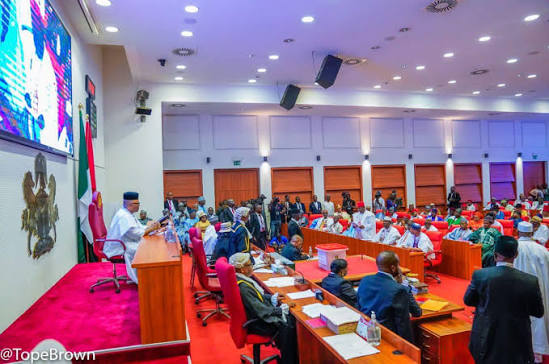
This is why, in a flow of events unsurprising to absolutely no one, three years after its passage, the implementation of the Nigeria Startup Act remains uneven. Some provisions have been activated. Others remain largely aspirational. And critically, the work of pushing for proper implementation, advocating for complementary legislation, and ensuring that states like Oyo benefit from the Act’s provisions falls significantly on Nigeria’s federal legislators, including the senators who represent Oyo State’s three senatorial districts: Oyo North, Oyo Central, and Oyo South.
As another election cycle approaches in 2027 and senatorial aspirants begin their campaigns, the technology community in Oyo State needs to pay close attention to where these candidates stand on the digital economy. The time has passed for vague, generic sloganeering, and the tech community needs to start asking the senatorial aspirants crucial questions like. Have they read the Nigeria Startup Act? Do they understand what it means for Oyo State-based startups? Have they engaged with the National Information Technology Development Agency (NITDA)? Have they held any consultation with tech stakeholders in their senatorial districts?
The silence from most aspirants on these questions is not accidental. It is a sign of the broader pattern in Nigerian politics where digital economy issues are treated as niche concerns for geeks, and turtleneck wearing “elites” rather than mainstream development priorities. But this framing is outdated. Nigeria’s technology sector contributes significantly to GDP and employs millions of young people. For example Moniepoint has just signed a 3 billion naira innovation fund across three Nigerian universities, with more in the pipeline In Oyo State, the ecosystem, though still developing, encompasses software developers, digital marketers, fintech users, e-commerce entrepreneurs, and a growing freelance workforce that transacts in dollars and euros while living in Ibadan, Ogbomoso, and beyond.
A senator who does not understand or engage with this reality is a senator who cannot effectively represent a significant and growing segment of their constituents.
So what should Oyo’s senatorial aspirants be saying? They should be speaking about federal budgetary allocations for digital infrastructure in the Southwest. They should have a position on the taxation of digital services and the impact of current policies on small tech businesses. They should know what a startup label means under the Nigeria Startup Act and why access to it matters for a small software company in Oyo Town trying to win government contracts.
They should also be speaking about connectivity. Broadband penetration in Oyo State’s rural and semi-urban areas remains low. Closing this gap requires federal intervention — spectrum allocation decisions, Universal Service Provision Fund deployment, and pressure on telecommunications companies to expand coverage. These are senate-level conversations. A senator who has not had them is a senator who is absent from the most important infrastructure debate of this generation.
Silence on the digital economy is not neutrality. It is a signal. As you evaluate the men and women who want to represent Oyo State in the Senate from 2027, let the digital economy be one of your primary filters. Ask them directly. Record their answers. Share the responses. Because in 2027, the state that organises itself to demand digitally literate representation will be better positioned to benefit from the next wave of federal investment in technology infrastructure.