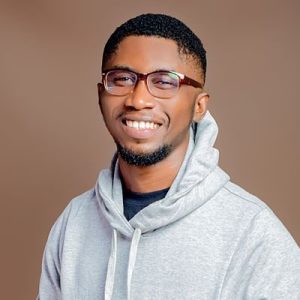
In the rapidly evolving world of technology, few names resonate with the clarity, purpose, and cultural significance as that of Dr. Tunde Adégbolá. A broadcast engineer, computer scientist, and human language technologist, Dr. Adégbolá has devoted decades to a cause that is both technically challenging and culturally vital: integrating African languages—especially Yorùbá—into the digital age.
At Techies Node, where we spotlight pioneers at the intersection of technology and society, we find in Dr. Adégbolá a rare example of brilliance that serves both innovation and identity.

The Silent Erosion of Language
Languages are not just tools for communication; they are vessels of history, culture, and worldview. Yet, across Africa, indigenous languages are gradually yielding ground to colonial and global tongues. For the Yorùbá language—spoken by over 40 million people in Nigeria and the diaspora—the risk is not disappearance, but digital irrelevance. In a world increasingly mediated through screens and algorithms, languages that fail to adapt become culturally muted and technologically invisible.
This is the challenge that Dr. Tunde Adégbolá saw with clear eyes and chose to confront—not in protest, but in code.
Engineering Meets Culture
Dr. Adégbolá’s background is as rich and multidimensional as the language he champions. With degrees in Electrical Engineering, Computer Science, and a Ph.D. in Information Science focused on Human Language Technology (HLT), he merges rare technical depth with an even rarer cultural mission.
In the 1990s and early 2000s, while most of Nigeria’s budding technologists were focused on networks, code, and mobile apps, Dr. Adégbolá founded the African Languages Technology Initiative (Alt-i). Based in Nigeria, Alt-i is the first and only private HLT-focused research institute in West Africa committed to developing computational tools for African languages.
From creating spell checkers and diacritizers for Yorùbá, to localizing Microsoft products like Windows and Office into indigenous languages, Dr. Adégbolá’s work has laid the groundwork for what can only be described as digital linguistic justice.
The Science of Tone and Meaning
Anyone who has tried to write Yorùbá on a standard English keyboard understands the limitations. Diacritics—the tone marks that give Yorùbá its unique melodic precision—are not just stylistic. They define meaning.
“Òrìṣà” (deity) and “Oríṣà” are not interchangeable.
Loss of tone is a loss of meaning, a distortion of heritage.
Dr. Adégbolá and his team at Alt-i tackled this challenge head-on by building automatic diacritic placement systems, tone-sensitive speech recognition algorithms, and even a custom keyboard layout optimized for typing Yorùbá efficiently. His work has enabled software to process the nuances of Yorùbá as a living, complex language—not a second-class script.

Language as Infrastructure
We often think of infrastructure in terms of roads, bridges, and bandwidth. But cultural infrastructure is just as important—especially for a multilingual, multicultural continent like Africa. Dr. Adégbolá has argued that for any society to fully participate in the knowledge economy, its native language must be computationally enabled.
Through his advocacy and systems development, he helped seed the idea that language development is nation-building. Without access to digital tools in indigenous languages, millions of people—particularly children and elders—are excluded from the digital economy, civic participation, and educational progress.
Thanks to his efforts, the Yorùbá language has been included in several international platforms, recognized not only as a spoken language but as one that can exist and thrive in cyberspace.
The Legacy of Alt-i
Today, the African Languages Technology Initiative stands as a beacon for what is possible when tech is built with cultural intentionality. Alt-i has created language models, worked with local and international organizations, and inspired a new generation of technologists who understand that coding for community is just as important as coding for commerce.
In an era where African tech often centers on fintech, mobility, and e-commerce, Dr. Adégbolá has quietly built something much more foundational: a future where African children can learn, code, speak to machines, and shape their world in their mother tongue.
More Than a Technologist
Dr. Adégbolá is also a musician, former national athlete, and teacher. His work bridges multiple disciplines, reinforcing the idea that technology should not exist in isolation from culture, art, or language. He has taught telecommunications and artificial intelligence at universities across Nigeria and mentored generations of scholars in computational linguistics—many of whom are now pushing the frontiers of African AI.
His recognition by organizations like Change-A-Life Foundation (Unsung Hero Award), Microsoft, and the DAWN Commission only hint at the impact of his decades-long commitment to Africa’s linguistic empowerment.
Why It Matters for the Tech Ecosystem
At Techies Node, we believe that Africa’s tech ecosystem must go beyond copying global models. It must innovate in ways that are grounded in local realities. Dr. Adégbolá’s work offers a blueprint for what that looks like: world-class research that serves the people, not just the market.
He reminds us that we must design with culture in mind, build tools for the communities we come from, and ensure that as Africa enters the Fourth Industrial Revolution, we don’t leave our languages—or our identities—behind.
A Call to Action
As more startups emerge from Ibadan, Lagos, Nairobi, and Accra, the legacy of Dr. Tunde Adégbolá is a call to rethink the very foundations of African technology. How are we encoding our identities into our systems? Are our platforms truly inclusive if they ignore local languages? Can we build the next generation of AI without training it to understand our tones, proverbs, and ways of speaking?
If the answer is no, then we owe much to the man who helped us see why.
Dr. Tunde Adégbolá has not just built systems. He has built a movement. One that speaks, types, and thinks in Yorùbá—and invites the rest of the digital world to learn.
From all of us at Techies Node, we say ẹ ṣéun gan-an, Baba. Thank you for showing us the path.