#BuiltforAfrica: Finlay House of Inclusion Wants to Fix Workplace Culture Before Startups Build It Wrong
Most Nigerian founders think about inclusion, if they think about it at all, only after something has gone wrong, a discrimination complaint, a messy exit, a culture that quietly drove out half the women on the team. Finlay House of Inclusion, an Nigeria-based outfit working at the intersection of legal advocacy and inclusive development, is betting that founders would rather build it right the first time.
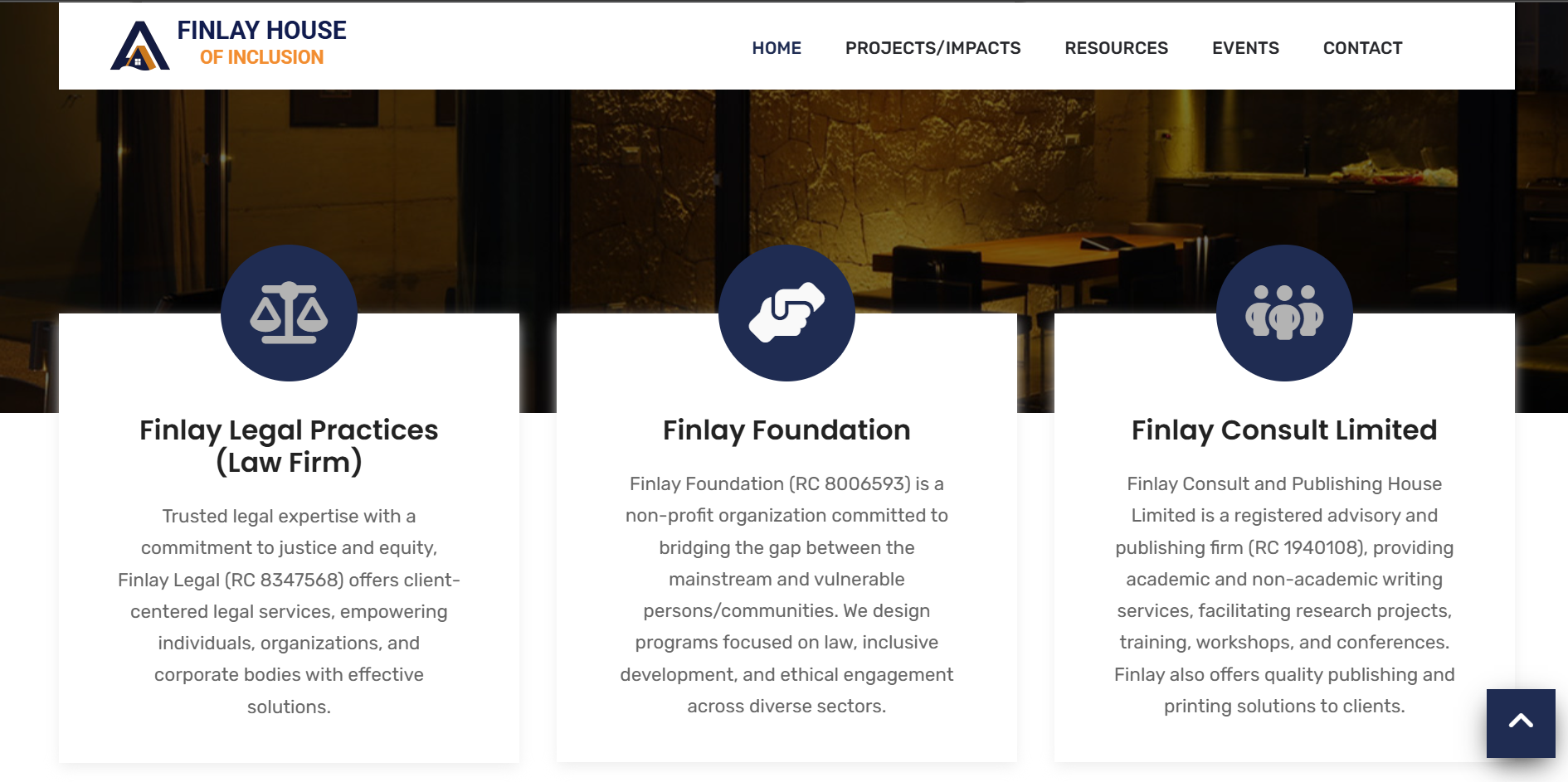
Finlay is structured as three connected arms: Finlay Legal Practices, a registered law firm; Finlay Foundation, the nonprofit driving community and advocacy work; and Finlay Consult, which handles research, training, and publishing. For startups, the entry point is the Finlay Inclusion Training Initiative, a programme launched this year aimed at three groups that shape how Nigerian workplaces actually function: founders and entrepreneurs, private sector team leads, and staff inside government agencies.
Finlay’s Pitch to Founders
The pitch to founders specifically is pragmatic, not moralistic. Early-stage companies in Nigeria operate inside a labour and employment law framework that most founders never read until they’re being sued or fielding an HR complaint they don’t know how to handle. Finlay’s training walks through that legal terrain directly, workplace rights, non-discrimination obligations, and labour protections, alongside the more cultural work of figuring out what inclusion actually looks like inside a ten-person team, before habits calcify into the kind of culture that’s expensive to unwind at fifty people.
That’s the real argument Finlay is making to the startup ecosystem: inclusion isn’t a values statement for the pitch deck, it’s a governance and retention problem that compounds with scale.
A founder who never thinks about gender equity or disability inclusion at headcount ten is the same founder fielding a viral Twitter thread about toxic culture at headcount two hundred. Finlay’s curriculum treats policy design, the kind that “holds up under pressure,” in their own framing, as a founder skill, not an HR afterthought bolted on once a company can afford a People function.
Beyond the training, Finlay also runs an Inclusion and Sustainability assessment tool that evaluates how inclusive an organisation actually is in practice versus on paper, plus a policy analysis and development consulting line that startups could plausibly use when drafting their first employee handbook or contractor agreements. For a founder who’s outsourced legal thinking to a generic template because proper employment counsel feels like a Series A problem, Finlay is positioning itself as the earlier, cheaper intervention.
There’s also a geographic story here that fits squarely inside #BuiltforAfrica’s thesis: Finlay is building from Ibadan, not Lagos, adding to the growing list of organisations proving that serious institution-building in Nigeria’s tech and governance space doesn’t require a Lagos address. For founders elsewhere outside the usual axis, that’s not a small detail, it suggests inclusion-focused governance support is becoming locally accessible rather than something only well-funded Lagos startups can afford to import.
Whether Finlay becomes a default stop for founders building their first HR policy remains to be seen, the organisation is still young, and its startup-specific offering is one training track inside a broader social-impact mandate. But the underlying bet is sound: as Nigerian startups mature and investors start asking harder questions about governance and culture, the founders who treated inclusion as infrastructure rather than PR will have an easier time scaling than the ones improvising it under pressure.
Follow Finlay House of Inclusion on the website or on social media at FinlayHOI.