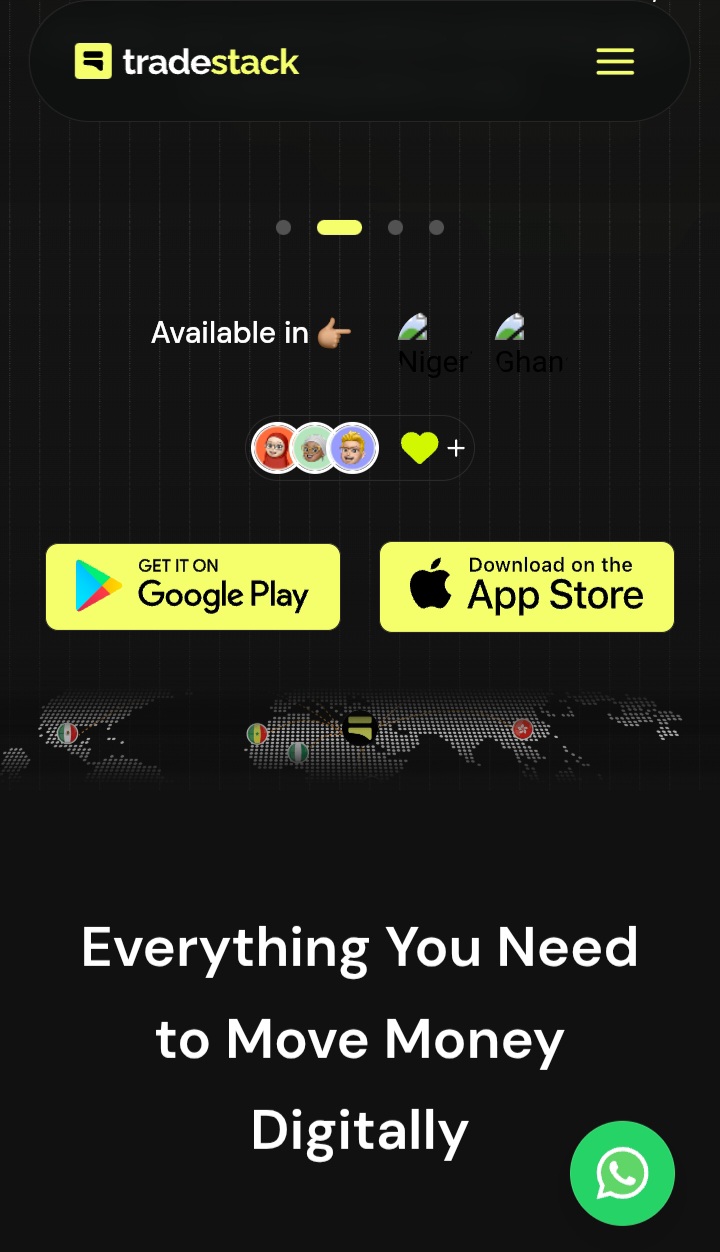
TradeStack Is Betting That Nigerians Want One App to move Money, Not Five.
Managing money as a Nigerian internet user can be stressful. One has to keep track of different apps for different transactions. A different app for crypto. Another for gift cards. A third for airtime and bills. If you perhaps happen to be an importer who sources from China that you would need perhaps a WhatsApp contact for the guy to do your China sourcing for you.
Enter TradeStack, a brand that has decided to ask a critical question: Is there a way around this needless fragmentation? For TradeStack, what Nigeria needs is not another crypto exchange, or another gift card marketplace, but a single platform for all of it.
TradeStack’s Unique Selling Proposition
TradeStack is a P2P-style trading platform with four legs. First is the Crypto layer: where you can buy and sell a long list of coins, BTC, ETH, USDT, BNB, SOL, DOGE, and over a dozen others, with instant Naira settlement. Second is the Gift card layer: users can convert Amazon, Steam, iTunes, Netflix, Xbox, PlayStation and similar cards into cash, or buy them outright. Third is the bills and airtime layer: the standard utility layer every Nigerian fintech eventually builds. And the one genuinely distinctive piece, a Pre-Order and supplier-payment feature aimed at people importing from China, letting users pay suppliers in RMB and join batch pre-orders instead of fronting full payment upfront.
That fourth feature is the feature that is the most crucial in making TradeStack distinct from another consumer trading app and more like infrastructure for Nigeria’s import-dependent small business economy, the traders, resellers, and small manufacturers who already move money to China informally and are underserved by both traditional banks and most fintech apps built for salary earners in Lagos.
What does TradeStack offer in terms of actual infrastructure?
The crypto-to-gift-card-to-bills bundling isn’t new, it’s practically the default shape of a Nigerian fintech app in 2026. What’s the user should pay attention to is the sequencing implied by putting China sourcing and RMB settlement inside the same wallet as crypto trading.
From our end at Techies Node, that move suggests that TradeStack is chasing a specific user: someone who already trades crypto for liquidity, already deals in gift cards for arbitrage, and also needs a way to pay a supplier in Guangzhou without routing through three intermediaries and losing value at each stop. In other words, TradeStack isn’t just another vibe coded trading app just built to look cool, it is an app for a specific kind of cross-border hustle, one that has identified its market and the problem that they need solved
The platform lists availability in Nigeria and Ghana, which tracks with a build-once, expand-regionally approach common among the current generation of West African fintechs. The goal is to start where the regulatory and liquidity conditions are workable, then replicate.
So Can TradeStack actually do What it Says on the Package?
Every claim on the page, bank-grade encryption, cold storage with multi-sig, 24/7 automated payout processing, a “proprietary 3-step verification system” for gift cards, is standard language for the category. The question #BuiltForAfrica is interested in is not whether TradeStack says the right words, but whether the underlying settlement rails hold up at volume: Does instant crypto-to-Naira stay instant when Naira liquidity gets tight? Does gift card verification stay fast when card supply spikes, does RMB settlement for suppliers survive the FX volatility that’s defined the last few years of Nigerian commerce.
The bigger pattern for TradeStack
TradeStack is a data point in a trend we have observed in the African Fintech ecosystem: African fintech products increasingly refuse to stay in their lane. A crypto exchange becomes a gift card marketplace becomes a bill payment app becomes a trade finance tool. For most apps, it ends up becoming feature bloat chasing retention. But with TradeStack, especially with the China sourcing angle, it’s a genuine read on what a specific user segment actually needs, bundled into a single wallet because that’s how money actually moves for them.
Whether TradeStack becomes real infrastructure for Nigeria’s import trade or just another crypto-and-gift-card app with an ambitious FAQ page will come down to execution most users never see: settlement speed under stress, supplier verification quality, and whether the RMB payment rail actually removes friction or just relocates it.
That’s the test every #BuiltForAfrica platform eventually faces. Bundling is easy torun. Hyounce. It’s harder to run.
To find out more about TradeStack visit the website