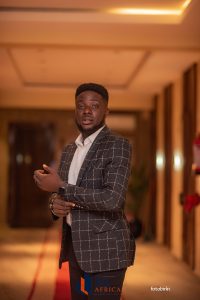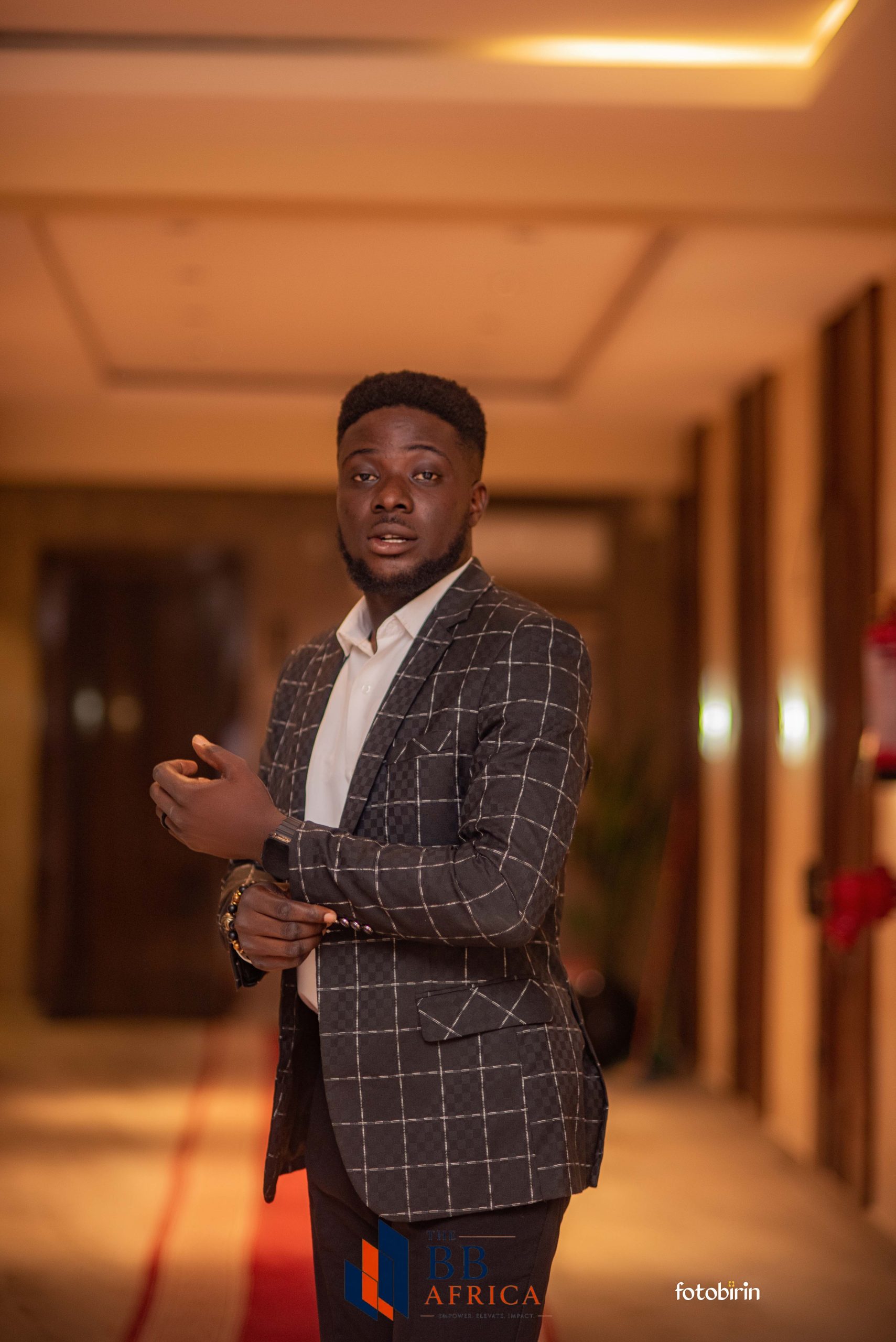
The Ibadan Media Conference 3.0 is only a few days away. In this exclusive interview with the convener Temidayo Adesuyi, he shares his insights on what the media ecosystem Ibadan looks like, what it took to put the event together, what he hopes attendees will gain from the event, and other issues pertaining to the media in Ibadan.
1. “Outside the Frame” is the theme of Ibadan Media Conference 3.0 this year. What does that phrase mean to you in the context of Ibadan’s media and creative economy specifically? Outside whose frame?
For me, “Outside the Frame” is really about challenging the limits we’ve placed on ourselves.
There’s this idea that if you want to make it big in media, tech or the creative industry, you have to move to Lagos or wait for someone outside Ibadan to validate what you’re doing. I don’t agree with that.
So when we say “outside the frame,” I’m talking about stepping outside the way we’ve always seen ourselves, our city and even our possibilities.
Outside the frame of “this is how things are done in Ibadan.” Outside the frame of thinking locally when the world is now connected globally.
There are people doing amazing things here. The question is, are we thinking big enough, documenting it enough and creating enough opportunities around it?
2. Ibadan Media Conference 3.0 guests includes creative directors, brand leads, executive coaches, and a notable tech ecosystem voice in Danjuma Balogun, convener of Ibadan Tech Expo. What’s the overlap you’re seeing between media infrastructure and tech ecosystem building in Ibadan right now?
I think the overlap is becoming clearer every day.
Media gives people visibility, storytelling and communication, while technology gives us better ways to build, distribute and scale those ideas.
You can have a great business or product, but if nobody knows about it, there’s a problem. And you can have great content, but without the right technology, systems and business structure behind it, scaling becomes difficult.
That’s why I didn’t want IMC to be just a gathering of photographers, videographers and content creators. The conversation has to be bigger than that.
We’re talking about the whole ecosystem — creativity, technology, branding, business, people and the infrastructure that helps all of them grow.
3. A lot of ecosystem conversations in Nigerian media still default to Lagos as the reference point. Is IMC an attempt to build a parallel convening space for Ibadan, or to plug Ibadan into the existing national conversation?
Honestly, I don’t see it as us trying to compete with Lagos.
Lagos already has its ecosystem and its own opportunities. What I want is for Ibadan to have a stronger voice in the national conversation.
Ibadan Media Conference 3.0, and other editions to follow is creating a space where someone can come to Ibadan, meet people doing serious work, exchange ideas and realise that there’s actually a lot happening here.
And hopefully, it also makes people outside Ibadan start paying attention.
So yes, we’re building something here, but we’re not building it to isolate Ibadan. We want to connect Ibadan to the bigger picture.
4. What’s one thing Ibadan’s media and creative ecosystem has that Lagos doesn’t, that people consistently undervalue?
I’d say community.
Ibadan still has that sense of community where people can actually know each other, collaborate and grow together.
Lagos has a lot of opportunities, no doubt. But because of how competitive and fast-paced it is, sometimes everything becomes transactional.
Here, there’s still room to build genuine relationships.
The problem is that we sometimes underestimate what we have because we’re too busy comparing ourselves to Lagos.
5. Media conferences tend to celebrate launches and success stories. Which failure or stalled initiative in Ibadan’s media ecosystem have you noticed that you think more people should talk about?
I think one of the biggest failures is our inability to sustain things.
We have amazing ideas. Someone starts something, people get excited, everybody shows up for the first few editions, and then somehow it dies.
And I think we need to be honest about that.
Sometimes the problem isn’t funding. Sometimes it’s leadership, structure, consistency or simply not having a clear long-term plan.
I think we need to start asking ourselves, “How do we build things that will still be here in five or ten years?”
For me, that conversation is just as important as celebrating the things that are already working.
6. When you say “media,” are you mostly talking about content and storytelling, or does that include the technical, distribution, and business infrastructure that determines whether that content actually reaches anyone?
It definitely includes all of that.
I think we’ve reduced media too much to just cameras, videos and social media posts.
Media is storytelling, but it’s also distribution. It’s technology. It’s business. It’s branding. It’s understanding your audience and knowing how to get your message in front of them.
You can create the best content in the world, but if you don’t know how to distribute it or build a business around it, you’ll struggle.
That’s part of the reason IMC exists — to broaden the conversation around what media really is.
7. What’s the current state of storytelling and production capacity for Ibadan-based creatives and founders? Do you think enough people are actually documenting and communicating what’s happening here, or is there still a big gap?
There’s a lot of talent here. I’m very confident about that.
But I think documentation is still a big gap.
A lot of people are doing good work, but if you search for some of these stories, you may not find much about them. And if you don’t tell your story, somebody else will eventually tell it for you — or nobody will tell it at all.
We need more people documenting businesses, creatives, innovations, communities and even the everyday things happening around us.
Because in the long run, documentation becomes history.
8. If you had to point to one piece of infrastructure — physical, digital, or institutional — that Ibadan’s media ecosystem is missing, what would it be?
I would say a proper creative and media hub.
Not just a place where people come to take pictures, but a space where creatives can learn, collaborate, work, meet clients, access equipment, record podcasts, produce content and connect with other people in the ecosystem.
We have individual creatives doing these things, but I think having a stronger shared infrastructure would make a huge difference.
It would give people a place to grow together instead of everyone trying to figure everything out alone.
9. How did this year’s speaker lineup come together? What was on your mind when you decided who would get an invite to IMC 2026?
The first thing I asked myself was: “What kind of conversation do I want people to have when they leave IMC?”
I wasn’t looking for people simply because they are popular or have a large following.
I wanted people who could bring different perspectives to the conversation.
That’s why you have people from media, branding, personal development, business and technology.
Because the creative economy doesn’t exist in one box.
I wanted the lineup to reflect that.
10. What’s one question you wish journalists and content platforms covering Ibadan’s media and tech scene would ask more often, instead of the questions they usually ask?
I think I’d like them to ask: “What are we building?”
Not just, “Who is the next big person?” or “What event is happening?”
What are we actually building here?
What systems are we creating? What opportunities are we creating for the next person? What can still exist even when the people currently leading it are no longer there?
Because ultimately, I think that’s the bigger conversation.
It’s not just about who is doing something impressive today. It’s about what we are building that can outlive us.
The Ibadan Media Conference (IMC), themed “Outside the Frame,” holds September 19th at 9AM WAT at the RCCG Trinity Assembly, Ring Road, Ibadan. Register to attend on the event registration portal