TourStack Wants to Make African Concerts Bankable. The Real Test Is Whether Banks Believe It.
For Olukayode Adebayo, Founder/ CEO of Ckrowd, a concert is not just a concert; it is a temporary economy where people buy tickets, businesses provide services, workers get paid, and stakeholders at different levels earn money. But music concerts in Africa need more than just bigger crowds, it needs better infrastructure.
Africa’s live music export numbers are the kind of stat every investor deck loves to open with. Afrobeats streams are up, Amapiano is taking over the world, festival lineups abroad are stacked with African names, and the “continent’s moment” framing writes itself.
However, what that framing often misses out on is what happens on the ground when a promoter in Kigali tries to book an artist from Lagos, pay them across two currencies, insure the show against cancellation, and convince anyone with capital that the whole thing won’t collapse into a payment dispute or a no-show.
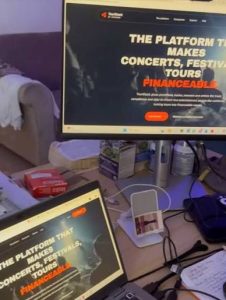
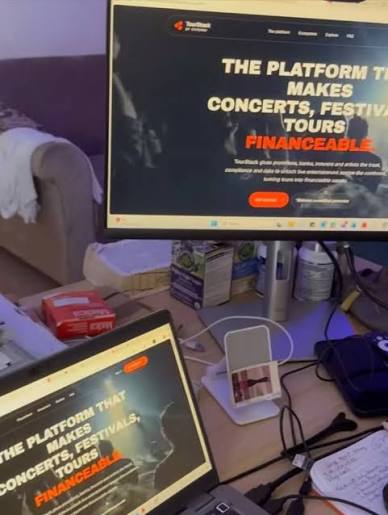
Ckrowd’s new platform, TourStack by Ckrowd, wants to fill that void between cultural demand and financial infrastructure in the African music industry.
What TourStack by Ckrowd is Bringing to the Live Entertainment Space.
TourStack has four layers on one channel: KYC/AML verification for promoters, milestone-based escrow for tour financing, automated underwriting for event cancellation insurance, and compliant cross-border payment rails across African currencies. Ckrowd believes that that area is not an area that has been explored, especially for live entertainment on the continent. The current state of the live entertainment space is one of opacity, and as such, capital, banks, insurers, sponsors stay on the sidelines because they are not sure that the risk is worth the financial commitment.
The process is fairly linear: Ckrowd creates a “Tour Project” with an artist roster and fee range, promoters submit an Expression of Interest with their venue and funding model, TourStack scores the match, and the system creates a projection around estimated revenue, costs, risk notes, in a manner in which a financier to actually act on. It’s less a marketplace and more an underwriting pipeline with a promoter-facing front end.
Adebayo is committed to the ideal that TourStack by Ckrowd as a platform can kickstart a phase in the African music ecosystem where as he puts it “Capital can price risk more accurately, insurance can be structured more intelligently, sponsorship can be measured rather than assumed.”
He believes that the next phase of African live entertainment will not be defined by the number of artistes that a tour promoter or an event organizer can put on a stage, but how clearly the industry can see and finance what happens on that stage
TourStack by Ckrowd’s numbers, with the Appropriate Caveats
TourStack cites ₦320M+ in payments facilitated, 500+ verified promoters, 230+ promoter credit files, and zero defaults to date, with live financial infrastructure in Nigeria, South Africa, Kenya, Ghana, Rwanda, and Uganda. Access Bank and Sanlam Allianz are named as backers.
Zero defaults is a genuinely useful number if the sample size behind it is meaningful, but the platform doesn’t disclose transaction count or time-in-market against that claim, and “zero defaults” is a much easier sentence to write in year one than year three. The credit-file number (230+) is arguably the more honest metric here: it’s the underlying data asset TourStack is actually building, and the one that will decide whether this works.
Why TourStack by Ckrowd fits our #BuiltForAfrica thesis
This is the same story we’ve told across #BuiltForAfrica with payments and logistics: the demand-side narrative (Afrobeats is huge, Africa has a large youthful population, African products are in demand, African talent is exportable) has outrun the boring, unglamorous rails needed to actually move money and manage risk around that demand.
TourStack isn’t selling access to audiences or artists, it’s selling trust as a byproduct of compliance, data over instinct, and a multimarket, multi currency, locally compliant platform that is tailor made for how the African live entertainment economy operates.
The “$28B addressable market, 400% YoY genre growth” figures on the landing page are the kind of numbers that belong in a pitch deck, not a credibility argument; they are only pointers to why capital should be paying attention to Tour Stack, not evidence that it does yet.
What to watch out for from TourStack by Ckrowd
Within a few months of its launch, the company is already undergoing its first stress test, with a 3 Cities One Sound Tour organized by SanlamAllianz and CkrowdLive slated for October 2026. The tour will take place in Ibadan, Abeokuta, and Osogbo, all in Nigeria. That tour will go a long way to let the ecosystem know:
– Whether banks and insurers actually underwrite through TourStack’s risk data at scale, or whether Access Bank and Sanlam Allianz’s involvement stays pilot-level
– Whether the “zero defaults” claim survives a larger transaction volume and a full tour season across all six live markets
– Whether promoters outside the biggest cities, the Ibadans and the Abeokutas, not just the Lagoses, get meaningfully onboarded, or whether verification infrastructure ends up concentrating around markets that already have strong banking ecosystems
– Whether the insurance layer (event cancellation, non-appearance cover) actually prices claims fairly when something goes wrong, since that’s the product’s real stress test.
TourStack’s core pitch is that trust is infrastructure, not paperwork. That’s the right instinct. Whether it holds is a function of how it performs the first time a tour actually falls apart, not how clean the dashboard looks before then.